Why Charge Acceptance Matters in Batteries – And How Cancrie Nanocarbon Is Improving It
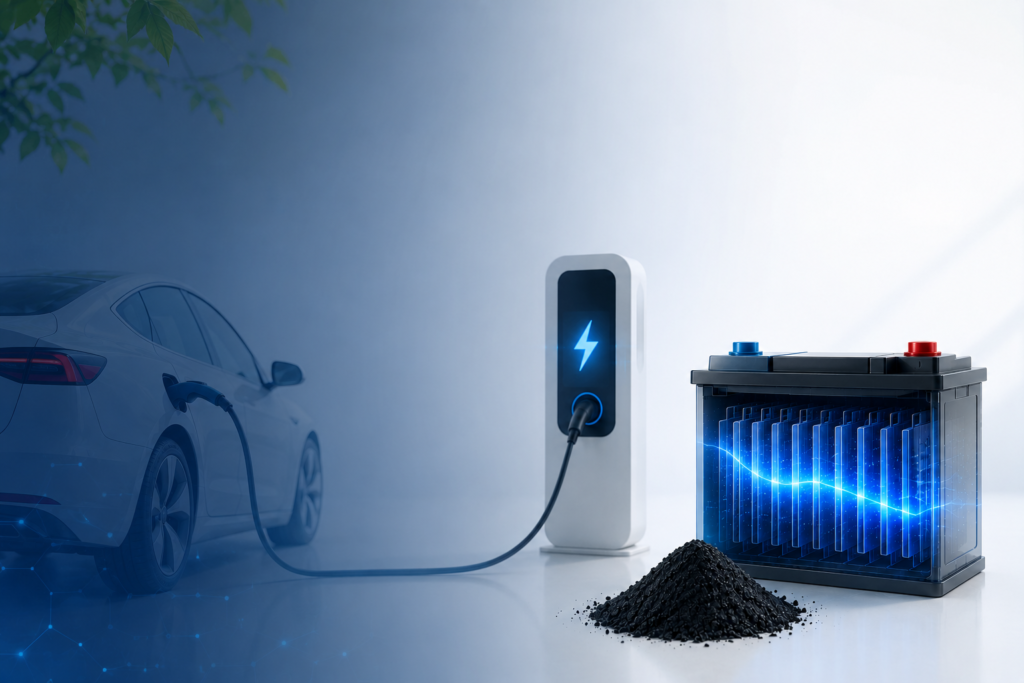
Charge acceptance refers to a battery’s ability to efficiently absorb and store electrical energy during charging. Higher charge acceptance enables faster charging, lower energy loss, improved efficiency, and longer battery life. It is especially important in applications such as e-rickshaws, UPS systems, solar storage, telecom backup, and automotive start-stop systems where batteries undergo frequent charging cycles. In automotive applications, lead-acid batteries are often charged for very short durations under constant-voltage conditions during traffic movement and braking events. The battery must rapidly absorb this charge and instantly provide high cranking power for engine restart. Poor charge acceptance limits this capability and accelerates sulfation, making it a critical challenge for modern lead-acid batteries. Lead-acid batteries often struggle under partial state-of-charge (PSoC) conditions. Cancrie nanocarbon technology addresses this challenge by improving conductivity, optimizing pore size distribution, and enhancing ion transport within the negative plate. The engineered porous structure improves active surface utilization and reduces sulfation, enabling faster charge transfer. Industrial tests have demonstrated up to 60% improvement in charge acceptance using Cancrie nanocarbon additives in lead-acid batteries. The charge acceptance graph highlights significantly higher current absorption compared to conventional systems. These improvements can translate into faster charging, better reliability, lower electricity losses, and longer battery life, helping unlock cleaner and more efficient energy storage solutions. More than 2 results are available in the PRO version (This notice is only visible to admin users) Recent Post Overcoming Lead-oxide Price Volatility Bycancrie May 22, 2026 Uncategorized I) Understanding the Lead Market DriversA) Energy Costs: Since the Barton Pot and Ball Mill… Read More Boosting Lead-Acid Battery Performance with Cancrie Nanocarbon Bycancrie April 19, 2026 Uncategorized Lead-acid batteries have long been a staple in various applications like inverters, solar energy… Read More Enhancing Automotive Lead-Acid Battery Performance with ‘Cancrie’ Nanocarbon Bycancrie April 19, 2026 Uncategorized ‘Cancrie’ Nanocarbon is a next-generation negative plate additive engineered to tackle these… Read More Next-Gen Solar Battery by Cancrie Nanocarbon Bycancrie April 19, 2026 Uncategorized Why Traditional Solar Batteries Struggle Solar batteries operate in harsh conditions—irregular… Read More Why Cancrie Designs Processes Around Material Behaviour, Not Just Machines Bycancrie April 19, 2026 Uncategorized Why Material Properties Matter More Than Machinery In industrial processing, discussions often begin… Read More
Overcoming Lead-oxide Price Volatility
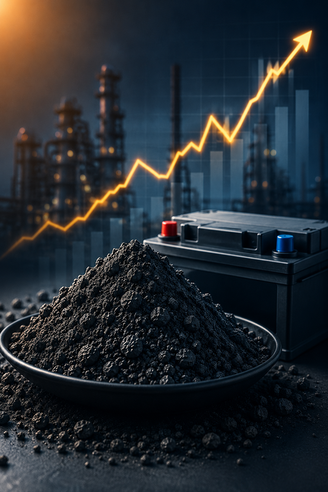
I) Understanding the Lead Market DriversA) Energy Costs: Since the Barton Pot and Ball Mill processes are electricity-intensive, a spike in industrial energy prices will drive up the lead oxide premium even if the LME lead price remains flat. B) Refined Lead Metal Prices: Lead metal accounts for 90–95% of lead oxide cost. Any movement in LME/spot lead prices directly impacts lead oxide prices, usually with a 2–6 week lag.Volatility in mining output, smelting capacity, and inventories strongly affects prices. C) Additives & Carbon Technology: The Cancrie AdvantageIn 2025, manufacturers are increasingly adding carbon and silicon to lead oxide pastes to compete with Lithium-ion. While standard “doped” oxides often carry a high price tag, this is where Cancrie provides a strategic breakthrough for energy storage manufacturers. The future of lead-acid in energy storage isn’t just about better hedging on the LME; it’s about material efficiency. Solutions like Cancrie allow manufacturers to de-risk their supply chain by needing less raw lead while simultaneously delivering a superior battery performance.Direct Financial Hedge: Reducing Lead Oxide IntensityThe most immediate benefit of Cancrie’s technology is the ability to reduce the total amount of Lead Oxide required in each battery.The Result: This acts as a “physical hedge” against LME price hikes. When lead prices soar, a battery that requires 5-8% less lead oxide inherently carries a lower risk profile and a more stable price point for the end consumer.Beyond Cost: A Quantum Leap in PerformanceWhile reducing lead content protects your margins, the application of Cancrie nano-carbons delivers a major jump in the battery’s core performance parameters:I) Higher Charge Acceptance: Cancrie’s nano-carbons facilitate faster electrochemical reaction kinetics, allowing the battery to absorb energy much more efficiently (up to 25% better in solar/inverter applications). II) Extended Life Cycle: By preventing “permanent sulfation”—the leading cause of lead-acid failure—Cancrie can increase the battery’s cycle life by 20% to 50%, significantly lowering the total cost of ownership (TCO). III) Facilitating Fast Charging: The interconnected porous structure of the nano-carbon lowers internal resistance, supporting higher current rates (up to 0.2C) for rapid recharge cycles. IV) Reduced Thermal Runaway: Improved electrical and thermal conductivity helps dissipate heat more evenly across the electrode, preventing the localized “hot spots” that lead to thermal runaway and battery swelling. V) Increased Electrode Strength: The nano-carbons act as a structural “skeleton” within the paste, increasing active material cohesion strength by up to 4X. This prevents plate shedding and degradation, especially in high-vibration or deep-cycle environments. More than 2 results are available in the PRO version (This notice is only visible to admin users) Recent Post Why Charge Acceptance Matters in Batteries – And How Cancrie Nanocarbon Is Improving It Bycancrie May 23, 2026 Uncategorized Charge acceptance refers to a battery’s ability to efficiently absorb and store electrical energy… Read More Boosting Lead-Acid Battery Performance with Cancrie Nanocarbon Bycancrie April 19, 2026 Uncategorized Lead-acid batteries have long been a staple in various applications like inverters, solar energy… Read More Enhancing Automotive Lead-Acid Battery Performance with ‘Cancrie’ Nanocarbon Bycancrie April 19, 2026 Uncategorized ‘Cancrie’ Nanocarbon is a next-generation negative plate additive engineered to tackle these… Read More Next-Gen Solar Battery by Cancrie Nanocarbon Bycancrie April 19, 2026 Uncategorized Why Traditional Solar Batteries Struggle Solar batteries operate in harsh conditions—irregular… Read More Why Cancrie Designs Processes Around Material Behaviour, Not Just Machines Bycancrie April 19, 2026 Uncategorized Why Material Properties Matter More Than Machinery In industrial processing, discussions often begin… Read More
Boosting Lead-Acid Battery Performance with Cancrie Nanocarbon
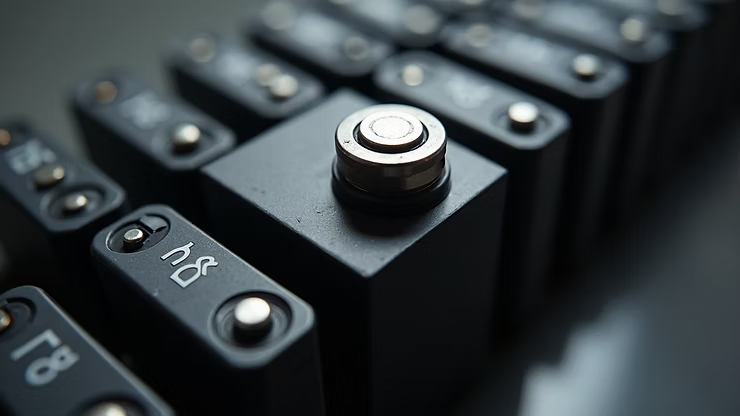
Lead-acid batteries have long been a staple in various applications like inverters, solar energy systems, SLI (starting, lighting, ignition), and start-stop vehicles. However, one challenge remains pervasive — improving charge efficiency and extending battery life. This is where Cancrie Nanocarbon comes into play. This innovative additive is designed to enhance the performance of lead-acid batteries through simple addition to the negative active material (NAM), enabling manufacturers to meet rising energy demands while adhering to eco-conscious principles. What Does Cancrie Nanocarbon Do? Cancrie Nanocarbon acts as a smart additive that significantly improves multiple aspects of lead-acid battery performance. It addresses three fundamental issues: Improves Charge Acceptance One of the primary benefits of Cancrie Nanocarbon is its ability to enhance electrochemical reaction kinetics at the negative plate. This leads to a remarkable 25% increase in charge acceptance. For applications reliant on solar and inverter systems, this efficiency is particularly valuable. By allowing faster and more efficient charging, Cancrie Nanocarbon ensures that energy is utilized optimally, thus contributing to the overall sustainability of energy systems. Cancrie Nanocarbon can significantly enhance lead-acid battery performance. Increases Lifecycle A critical factor in the longevity of lead-acid batteries is the prevention of permanent sulfation. This issue is one of the leading causes of premature battery degradation. Cancrie Nanocarbon actively helps to reduce this problem by promoting healthier charge and discharge cycles. In typical use cases, batteries that incorporate this nanocarbon additive can expect an extension of battery life by up to 20%. This increased lifecycle directly translates into cost savings and lower waste, making it an attractive option for manufacturers and end-users alike. Solar panels can benefit from enhanced lead-acid battery performance. Strengthens the Negative Plates The internal structure of lead-acid batteries plays a crucial role in their stability and performance. Cancrie Nanocarbon reinforces the negative active material, significantly reducing material shedding. This structural reinforcement translates into better longevity and stability, especially in applications like tubular and deep-cycle batteries, which require consistent performance over extended periods. How Is It Applied? One of the standout features of Cancrie Nanocarbon is its ease of application. It is a drop-in solution, meaning it can be seamlessly integrated into existing negative paste formulations without necessitating major changes to equipment or processes. This simple integration saves time, effort, and costs, making it a practical solution for manufacturers looking to enhance battery performance without altering their production lines. The material exhibits excellent dispersion qualities and integrates effortlessly with standard mixing practices. This makes it accessible for manufacturers of all sizes, from small workshops to large factories. Backed by Research & Field Validation Cancrie Nanocarbon is more than just a concept; it is a tested and validated solution. The additive has undergone rigorous testing over a three-year period in various international laboratories, proving its efficacy in lead-acid batteries. Notably, the Automotive Research Association of India (ARAI) has certified its performance, ensuring that this innovative solution adheres to high industry standards. Since its introduction, Cancrie Nanocarbon has been deployed in over 80 MWh of batteries across India over the past 1.5 years. This extensive field validation provides further assurance to manufacturers considering its use. Testing batteries with Cancrie Nanocarbon to ensure reliability and efficiency. More than 2 results are available in the PRO version (This notice is only visible to admin users) Recent Post Why Charge Acceptance Matters in Batteries – And How Cancrie Nanocarbon Is Improving It Bycancrie May 23, 2026 Uncategorized Charge acceptance refers to a battery’s ability to efficiently absorb and store electrical energy… Read More Overcoming Lead-oxide Price Volatility Bycancrie May 22, 2026 Uncategorized I) Understanding the Lead Market DriversA) Energy Costs: Since the Barton Pot and Ball Mill… Read More Enhancing Automotive Lead-Acid Battery Performance with ‘Cancrie’ Nanocarbon Bycancrie April 19, 2026 Uncategorized ‘Cancrie’ Nanocarbon is a next-generation negative plate additive engineered to tackle these… Read More Next-Gen Solar Battery by Cancrie Nanocarbon Bycancrie April 19, 2026 Uncategorized Why Traditional Solar Batteries Struggle Solar batteries operate in harsh conditions—irregular… Read More Why Cancrie Designs Processes Around Material Behaviour, Not Just Machines Bycancrie April 19, 2026 Uncategorized Why Material Properties Matter More Than Machinery In industrial processing, discussions often begin… Read More Backed by Science, Built by Experts The development of Cancrie Nanocarbon is the result of collaboration among material scientists, battery chemists, and chemical engineers who are deeply familiar with both laboratory research and real-world battery manufacturing. Their expertise ensures that the additive not only performs well in theory but also integrates smoothly into existing manufacturing processes. By facilitating faster and more efficient electrochemical reactions at the negative plate, Cancrie Nanocarbon empowers manufacturers to maximize performance without incurring higher costs. Sustainability as a Value Add In today’s environmentally aware marketplace, sustainability is not just an option; it is a necessity. Cancrie Nanocarbon is produced from agricultural waste using a low-temperature, patented process. This means it avoids reliance on fossil fuels, resulting in a significantly lower carbon footprint compared to traditional battery materials. Using sustainable methods and materials aligns with the industry’s push towards greener battery solutions, making Cancrie Nanocarbon a viable option for manufacturers committed to adopting environmentally friendly practices. Interested in Evaluation? If you’re exploring ways to enrich your battery’s reliability and performance while keeping costs manageable, Cancrie Nanocarbon offers a practical pathway to meet your needs. The team behind Cancrie is eager to assist, providing sample trials and sharing comprehensive performance data to help you assess how the additive can be integrated into your production line effectively. To learn more about how Cancrie Nanocarbon can be a game-changer for your lead-acid battery applications, please don’t hesitate to reach out. By focusing on improving charge efficiency, extending battery life, and enhancing structural strength, Cancrie Nanocarbon opens new avenues for lead-acid batteries in varying applications. This innovative additive is not just a technical advancement — it is a smart choice for those looking to thrive in a competitive marketplace while promoting sustainability. Improved lead-acid battery performance is not just a dream; it is the future we’re working towards with Cancrie Nanocarbon
Enhancing Automotive Lead-Acid Battery Performance with ‘Cancrie’ Nanocarbon
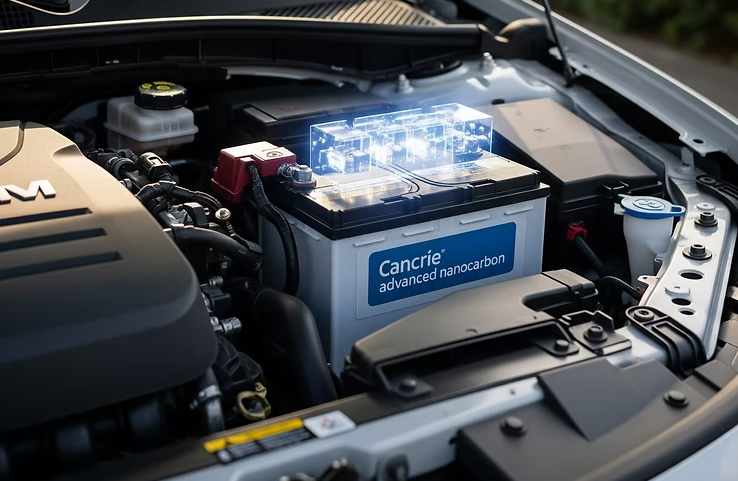
Cancrie Nanocarbon: Next-Generation Negative Plate Additive for Automotive & Start-Stop Lead-Acid Batteries Cancrie Nanocarbon is a next-generation negative plate additive engineered to solve real-world battery performance challenges without disrupting existing production processes. It has been rigorously validated at ARAI and international laboratories under IEC 60095 and BIS:14257 protocols for SLI applications. Tested at ARAI and global labs as per IEC 60095 & BIS:14257 standards. In India’s hot climate and congested traffic conditions, automotive and start-stop lead-acid batteries face serious durability challenges. Frequent engine restarts, rough roads, short driving cycles, and high ambient temperatures contribute to early battery failure, especially in vehicles operating in city traffic. Field-Level Challenges Addressed 1. High Under-Hood Temperatures & Water Loss Conventional carbon additives can accelerate hydrogen evolution, leading to water loss and drying of plates, especially in high-temperature engine compartments. Cancrie Nanocarbon maintains thermal stability and does not accelerate water loss, helping batteries comply with BIS limits for water consumption. It is suitable for both flooded and low-maintenance VRLA batteries. 2. Inefficient Charging During Short Drives Start-stop vehicles often run short distances, leaving limited time for battery recharge. Traditional formulations may develop high internal resistance over repeated cycles, resulting in poor charge recovery and heat generation. Cancrie Nanocarbon enhances electrical conductivity within the negative active mass, reducing internal resistance. This helps keep internal temperatures lower during recharge, improving battery safety and longevity in repeated use. 3. Vibration Damage on Poor Roads Indian road conditions expose batteries to constant shocks and vibrations, which can lead to plate shedding and early capacity loss. Cancrie Nanocarbon improves the structural integrity of the negative plate by reinforcing the active material, offering better resistance to vibration and mechanical stress. Performance is validated under the vibration and shock sections of IEC 60095. 4. Sulfation and Performance Drop Urban driving with frequent starts and partial charging often leads to sulfation of the negative plate, reducing battery performance over time. Cancrie Nanocarbon improves porosity and ion mobility, reducing the likelihood of hard sulfation and supporting stable long-term operation. Key Advantages for Manufacturers Cancrie Nanocarbon is compatible with existing paste mixing, curing, and formation setups. It has already been deployed in large-scale production runs for SLI and start-stop batteries, helping small and mid-size manufacturers improve product quality without process changes or additional production burden. More than 2 results are available in the PRO version (This notice is only visible to admin users) Recent Post Why Charge Acceptance Matters in Batteries – And How Cancrie Nanocarbon Is Improving It Bycancrie May 23, 2026 Uncategorized Charge acceptance refers to a battery’s ability to efficiently absorb and store electrical energy… Read More Overcoming Lead-oxide Price Volatility Bycancrie May 22, 2026 Uncategorized I) Understanding the Lead Market DriversA) Energy Costs: Since the Barton Pot and Ball Mill… Read More Boosting Lead-Acid Battery Performance with Cancrie Nanocarbon Bycancrie April 19, 2026 Uncategorized Lead-acid batteries have long been a staple in various applications like inverters, solar energy… Read More Next-Gen Solar Battery by Cancrie Nanocarbon Bycancrie April 19, 2026 Uncategorized Why Traditional Solar Batteries Struggle Solar batteries operate in harsh conditions—irregular… Read More Why Cancrie Designs Processes Around Material Behaviour, Not Just Machines Bycancrie April 19, 2026 Uncategorized Why Material Properties Matter More Than Machinery In industrial processing, discussions often begin… Read More Key Benefits: • Lower internal resistance for reduced temperature rise during charging• Zero increase in water loss, making it suitable for hot climates and MF batteries• Improved vibration resistance for reduced plate shedding on rough roads• Better long-term charge retention for reliable urban driving performance• Rigorously tested at ARAI and certified international laboratories• Drop-in additive compatible with existing battery manufacturing processes Drop-In Additive, Proven at Scale If you are working to improve the performance and reliability of automotive or start-stop batteries for Indian roads and traffic conditions, Cancrie Nanocarbon offers a tested, practical, and affordable solution.
Next-Gen Solar Battery by Cancrie Nanocarbon
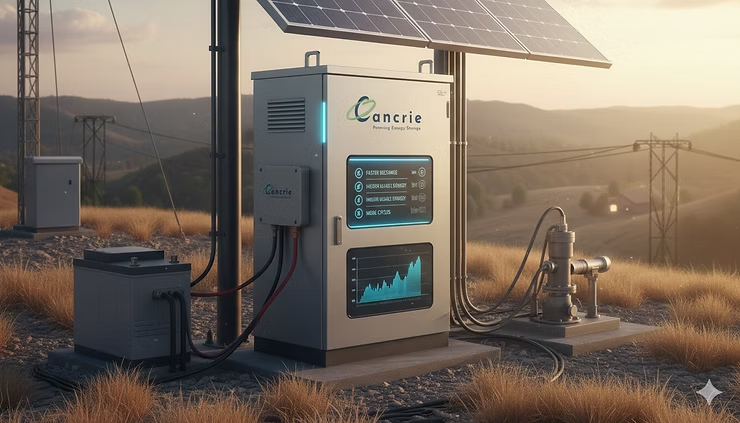
Why Traditional Solar Batteries Struggle Solar batteries operate in harsh conditions—irregular sunlight, deep discharge cycles, temperature fluctuations, and frequent load-shedding. These factors cause sulfation, poor recharge efficiency, and early capacity loss. As a result, energy output becomes unpredictable, and battery life shortens significantly. How Cancrie Nanocarbon Creates the Difference Cancrie uses Lead-Acid and Lithium-Ion batteries using advanced nanocarbon materials engineered for solar environments. The technology improves charge acceptance, reduces sulfation, and supports stable performance even under PSOC (Partial State of Charge)—a state most solar batteries operate in daily. Nanocarbon enhances the battery’s ability to absorb charge quickly even during short sunlight windows, ensuring better energy recovery on cloudy or low-irradiance days. Reduced resistance and better efficiency ensure more stored power is available for actual use each day. By limiting sulfation and stress during PSOC operation, batteries deliver more cycles with fewer performance issues. Optimized chemical stability extends overall battery life, lowering replacement frequency and long-term costs. Better Reliability for Off-Grid and Rural Solar From solar home systems and microgrids to telecom hybrid networks and agricultural pump controllers, Cancrie ensures more predictable energy availability. Batteries upgraded with Cancrie Nanocarbon deliver consistent performance and reduces battery replacements, lowering lifetime costs. More than 2 results are available in the PRO version (This notice is only visible to admin users) Recent Post Why Charge Acceptance Matters in Batteries – And How Cancrie Nanocarbon Is Improving It Bycancrie May 23, 2026 Uncategorized Charge acceptance refers to a battery’s ability to efficiently absorb and store electrical energy… Read More Overcoming Lead-oxide Price Volatility Bycancrie May 22, 2026 Uncategorized I) Understanding the Lead Market DriversA) Energy Costs: Since the Barton Pot and Ball Mill… Read More Boosting Lead-Acid Battery Performance with Cancrie Nanocarbon Bycancrie April 19, 2026 Uncategorized Lead-acid batteries have long been a staple in various applications like inverters, solar energy… Read More Enhancing Automotive Lead-Acid Battery Performance with ‘Cancrie’ Nanocarbon Bycancrie April 19, 2026 Uncategorized ‘Cancrie’ Nanocarbon is a next-generation negative plate additive engineered to tackle these… Read More Why Cancrie Designs Processes Around Material Behaviour, Not Just Machines Bycancrie April 19, 2026 Uncategorized Why Material Properties Matter More Than Machinery In industrial processing, discussions often begin… Read More
Why Cancrie Designs Processes Around Material Behaviour, Not Just Machines
Why Material Properties Matter More Than Machinery In industrial processing, discussions often begin with machinery — throughput, speed, configuration, and technological capability. Equipment specifications dominate early decisions, shaping how processes are designed and evaluated. Yet, despite increasingly advanced machines, many systems continue to struggle with inefficiencies, instability, and inconsistent outcomes. The reason is often overlooked: The success of any process is first determined by the material itself. At Cancrie, Materials Lead the Process — and machinery follows. Evaluating Process Performance Beyond Equipment Design Machinery is built to execute a process efficiently. However, materials define the boundaries within which that execution is possible. Two systems operating with identical equipment can produce vastly different results when material behavior differs. Materials are not passive inputs — they flow, interact, agglomerate, resist movement, and respond to their environment based on intrinsic properties. When these behaviors are misunderstood or underestimated, even the most sophisticated machinery cannot compensate. This disconnect frequently manifests as: These challenges are not mechanical failures — they are material-driven constraints. The Limitations of Machinery-First Thinking Traditional process design often assumes that: In reality, modern material systems rarely conform to these assumptions. Overlapping particle size distributions, density variations, surface interactions, and sensitivity to contact materials introduce complexities that cannot be addressed through machinery selection alone. As material complexity increases, the gap between machine capability and material behavior becomes more pronounced. Processes that rely solely on mechanical optimization frequently encounter diminishing returns. Shifting the Perspective: Designing Around Material Behavior A material-first approach reframes the design process entirely. Instead of asking what machinery can be deployed, it begins by understanding: At Cancrie, this way of thinking forms the basis of how material processing challenges are approached. By prioritizing fundamental material behavior early in the design process, solutions can be developed that align naturally with the realities of the material, rather than forcing adaptation through mechanical complexity. Companies operating in this space, including Cancrie, are increasingly recognizing that long-term process reliability depends less on equipment sophistication and more on material intelligence. Why This Matters in Today’s Processing Landscape Industries are rapidly moving toward advanced oxides, engineered carbons, and composite materials — systems where fine particle sizes, broad distributions, and sensitivity to contamination are common. In such environments, precision and compatibility become as critical as capacity and speed. Processes that succeed are those built with a clear understanding of material behavior, supported by appropriately selected and configured machinery. This balance enables stability, scalability, and adaptability as requirements evolve. Looking Ahead: Where Process Design Begins Machinery will continue to advance — becoming faster, more automated, and more efficient. Yet its effectiveness will always be limited by how well it aligns with material realities. At Cancrie, the focus remains on addressing this alignment by treating material behavior as a primary design input rather than an afterthought. This perspective supports the development of processes that are not only efficient at launch, but resilient over time. Translating Principle into Production Our foundational focus on material intelligence has led to a strategic deployment of state-of-the-art, customized machinery. At Cancrie, we have scaled our production to ensure that this advanced setup is perfectly aligned with material production, guaranteeing the high-quality output required for high-performing batteries. Machinery enables motion. Materials define possibility. When material properties — density behavior, particle size distribution, morphology, and surface interaction — are placed at the center of process design, systems become more predictable, efficient, and future-ready. Understanding materials first is not a constraint on innovation. It is the foundation upon which sustainable, high-performance processes are built — and the principle guiding how Cancrie approaches material processing challenges today and into the future. Materials First. Machinery Second. The Cancrie Way. Why Material Properties Matter More Than Machinery In industrial processing, discussions often begin with machinery — throughput, speed, configuration, and technological capability. Equipment specifications dominate early decisions, shaping how processes are designed and evaluated. Yet, despite increasingly advanced machines, many systems continue to struggle with inefficiencies, instability, and inconsistent outcomes. The reason is often overlooked: The success of any process is first determined by the material itself. At Cancrie, Materials Lead the Process — and machinery follows. Evaluating Process Performance Beyond Equipment Design Machinery is built to execute a process efficiently. However, materials define the boundaries within which that execution is possible. Two systems operating with identical equipment can produce vastly different results when material behavior differs. Materials are not passive inputs — they flow, interact, agglomerate, resist movement, and respond to their environment based on intrinsic properties. When these behaviors are misunderstood or underestimated, even the most sophisticated machinery cannot compensate. This disconnect frequently manifests as: Reduced separation efficiency Unstable operating conditions Increased wear, fouling, or downtime Variability in output quality These challenges are not mechanical failures — they are material-driven constraints. The Limitations of Machinery-First Thinking Traditional process design often assumes that: Materials behave uniformly Performance scales linearly Equipment optimization can resolve variability In reality, modern material systems rarely conform to these assumptions. Overlapping particle size distributions, density variations, surface interactions, and sensitivity to contact materials introduce complexities that cannot be addressed through machinery selection alone. As material complexity increases, the gap between machine capability and material behavior becomes more pronounced. Processes that rely solely on mechanical optimization frequently encounter diminishing returns. Shifting the Perspective: Designing Around Material Behavior A material-first approach reframes the design process entirely. Instead of asking what machinery can be deployed, it begins by understanding: How particles behave under operating conditions Where variability originates Which properties dominate system performance What constraints must be respected At Cancrie, this way of thinking forms the basis of how material processing challenges are approached. By prioritizing fundamental material behavior early in the design process, solutions can be developed that align naturally with the realities of the material, rather than forcing adaptation through mechanical complexity. Companies operating in this space, including Cancrie, are increasingly recognizing that long-term process reliability depends less on equipment sophistication and more on material intelligence. Why This Matters in