Cancrie Nanocarbon: Next-Generation Negative Plate Additive for Automotive & Start-Stop Lead-Acid Batteries
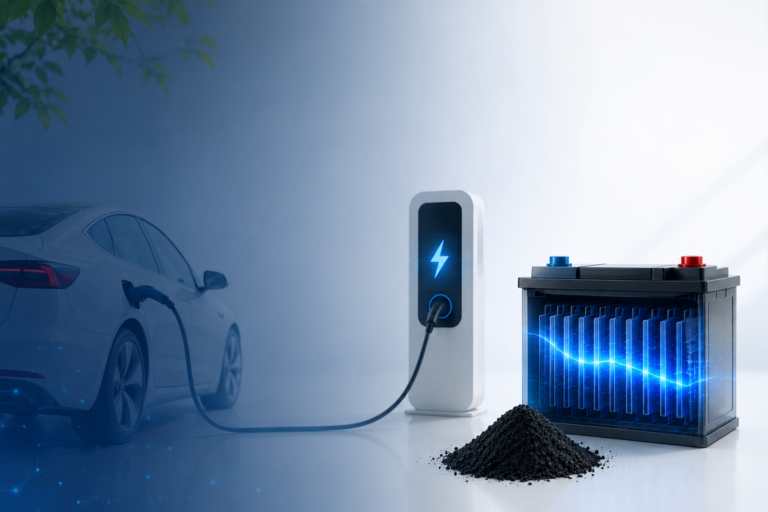
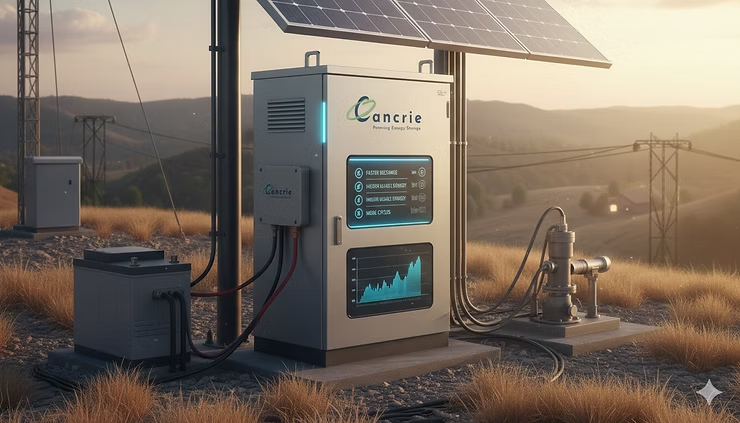
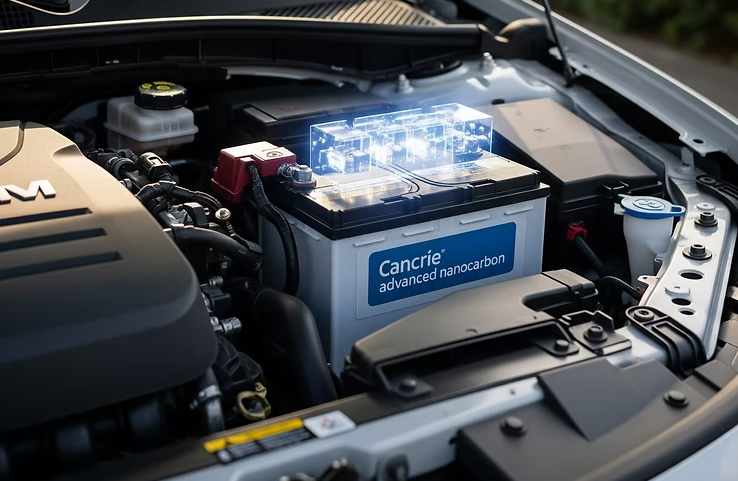
Cancrie Nanocarbon is a next-generation negative plate additive engineered to solve real-world battery performance challenges without disrupting existing production processes.
It has been rigorously validated at ARAI and international laboratories under IEC 60095 and BIS:14257 protocols for SLI applications.
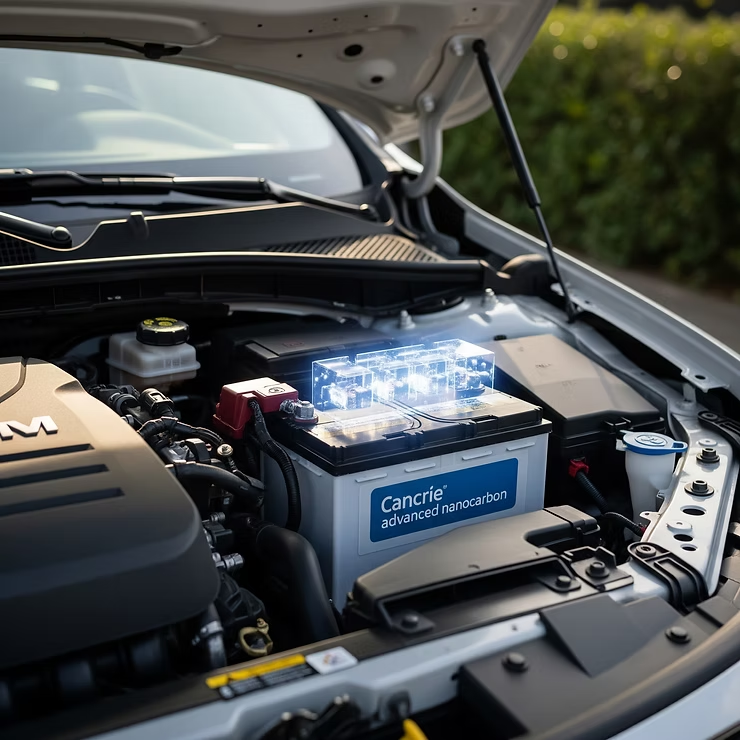
Tested at ARAI and global labs as per IEC 60095 & BIS:14257 standards.
In India’s hot climate and congested traffic conditions, automotive and start-stop lead-acid batteries face serious durability challenges. Frequent engine restarts, rough roads, short driving cycles, and high ambient temperatures contribute to early battery failure, especially in vehicles operating in city traffic.
Field-Level Challenges Addressed
1. High Under-Hood Temperatures & Water Loss
Conventional carbon additives can accelerate hydrogen evolution, leading to water loss and drying of plates, especially in high-temperature engine compartments.
Cancrie Nanocarbon maintains thermal stability and does not accelerate water loss, helping batteries comply with BIS limits for water consumption. It is suitable for both flooded and low-maintenance VRLA batteries.
2. Inefficient Charging During Short Drives
Start-stop vehicles often run short distances, leaving limited time for battery recharge. Traditional formulations may develop high internal resistance over repeated cycles, resulting in poor charge recovery and heat generation.
Cancrie Nanocarbon enhances electrical conductivity within the negative active mass, reducing internal resistance. This helps keep internal temperatures lower during recharge, improving battery safety and longevity in repeated use.
3. Vibration Damage on Poor Roads
Indian road conditions expose batteries to constant shocks and vibrations, which can lead to plate shedding and early capacity loss.
Cancrie Nanocarbon improves the structural integrity of the negative plate by reinforcing the active material, offering better resistance to vibration and mechanical stress. Performance is validated under the vibration and shock sections of IEC 60095.
4. Sulfation and Performance Drop
Urban driving with frequent starts and partial charging often leads to sulfation of the negative plate, reducing battery performance over time.
Cancrie Nanocarbon improves porosity and ion mobility, reducing the likelihood of hard sulfation and supporting stable long-term operation.
Key Advantages for Manufacturers
Cancrie Nanocarbon is compatible with existing paste mixing, curing, and formation setups. It has already been deployed in large-scale production runs for SLI and start-stop batteries, helping small and mid-size manufacturers improve product quality without process changes or additional production burden.
Recent Post